

How to Recognise and Reduce Dog Stress: Tips for Calming Anxious Dogs

🐾 Quick Answer
Yes, dog anxiety is very common and very manageable. The key is learning to spot the signs early, removing the triggers where you can, and building a calming routine that works for your dog. Read on for a practical, no-nonsense guide : including the natural ingredients that may help.
In this guide:
Your dog is panting but hasn't been exercising. They're following you from room to room, won't settle, or they've started destroying things when you leave. Sound familiar?
Anxiety is one of the most common issues dog owners face in New Zealand, and it can be distressing for everyone involved. The good news is that with the right approach : consistent routines, the right environment, and some natural support : most dogs can be helped significantly.
This guide covers everything: how to spot it, what causes it, and what you can actually do about it.
Why Do Dogs Get Anxious?
Dogs experience stress for many of the same reasons humans do : unpredictability, change, isolation, and fear. Understanding the root cause is the first step to helping your furry friend.
Separation Anxiety
This is by far the most common form of anxiety in dogs. Many dogs form deep attachments to their owners, and being left alone : even for a few hours : can trigger significant distress. Dogs who weren't gradually taught to be alone as puppies are particularly prone to this.
Loud Noises
Dogs have far more sensitive hearing than humans. Thunder, fireworks, construction noise, or even a vacuum cleaner can be genuinely frightening. Guy Fawkes and New Year's Eve are peak anxiety periods for many NZ dog owners.
Changes in Routine
Moving house, a new baby, a change in work schedule, a new pet : any shift in the familiar rhythm of life can unsettle a dog. They thrive on predictability, and disruption to their routine can trigger noticeable anxiety.
Social Stress
Unfamiliar dogs, crowded spaces, new people, or inadequate early socialisation can all make dogs anxious in social situations. Some dogs are naturally more sensitive than others.
Health and Discomfort
Pain or discomfort from an underlying health issue can also present as anxiety. Because dogs can't tell us when something hurts, restlessness or behavioural changes are sometimes the first sign that something physical is wrong. If anxiety appears suddenly without a clear trigger, a vet check is worthwhile.
🐾 Did you know?
Research suggests that up to 72% of dogs display at least one anxiety-related behaviour. It's one of the leading reasons pet owners seek advice from vets and behaviourists in New Zealand.
How to Spot a Stressed Dog
Dogs can't tell us they're struggling, so they show us. The tricky part is that some anxiety signals are easy to miss or misread as "bad behaviour." Here's what to look for.
Physical Signs
- Panting heavily without exercise or heat
- Yawning repeatedly, especially in calm situations
- Drooling more than usual
- Trembling or shaking
- Ears pinned back, tail tucked low
- Whites of the eyes visible ("whale eye")
Behavioural Signs
- Excessive barking, whining or howling
- Destructive behaviour : chewing furniture, scratching doors
- Pacing or inability to settle
- Hiding or withdrawing from family
- Toileting inside, even when housetrained
- Refusing food or eating less than usual
- Aggression : growling, snapping, biting (often a defensive fear response)
Quick Stress Check: Does your dog...
- Pant without obvious cause?
- Pace or struggle to settle?
- Bark or whine excessively when alone?
- Become destructive when left?
- Tremble around loud noises or strangers?
- Lose appetite in new situations?
If you're ticking three or more of these, your dog may be experiencing anxiety. Keep reading : this guide will help.
Natural Ways to Calm an Anxious Dog
The good news: most dog anxiety responds well to consistent, patient management. Here are the approaches that genuinely work.
1. Build a Predictable Routine
Dogs find security in consistency. Regular feeding times, walks at the same time of day, and predictable play sessions all signal to your dog that the world is safe and orderly. Even small routines : like a specific walk route or a post-dinner cuddle session : can have a meaningful calming effect over time.
2. Create a Safe Space
Every dog needs a retreat : somewhere quiet they can go when they feel overwhelmed. A crate with a soft blanket and familiar smells, a corner of a room, or a bed in a low-traffic area all work well. Let your dog choose when to use it rather than forcing them in. The key is that it's always available and always calm.
3. Exercise and Mental Stimulation
A tired dog is usually a calmer dog. Regular walks, play sessions, and mentally engaging activities : like sniff games, puzzle feeders, and training : burn off excess energy and reduce the restlessness that feeds anxiety. For high-energy breeds, this is especially important.
4. Desensitisation and Counter-Conditioning
For specific triggers like loud noises or strangers, gradual exposure at a low intensity : paired with positive rewards : can help retrain your dog's response over time. This takes patience but is one of the most effective long-term approaches for phobia-based anxiety.
5. Stay Calm Yourself
Dogs are extraordinarily attuned to their owners' emotional states. If you become anxious or frustrated when your dog is stressed, it often makes things worse. Remaining calm, speaking in a low steady voice, and avoiding fussing excessively during anxious moments can help your dog regulate more quickly.
6. Calming Music
Research has found that certain types of music : particularly classical, reggae, and soft rock : can have a measurable calming effect on dogs. Playing background music during high-stress periods (like when you leave the house or during a storm) is a simple, low-effort strategy worth trying. We've even put together a Spotify Calming Playlist for Dogs you can use.
7. Supplement Support
For dogs with persistent or moderate anxiety, calming supplements can make a real difference : particularly when combined with the behavioural strategies above. The most well-researched ingredients for canine anxiety include Ashwagandha, L-Theanine, Chamomile, and L-Tryptophan. More on these below.
Natural Ingredients That May Help with Dog Anxiety
Not all calming supplements are equal. Here's a breakdown of the key natural ingredients that have the strongest evidence behind them for dogs.
Ashwagandha
An adaptogenic herb used for centuries in traditional wellness practices. Ashwagandha (Withania somnifera) may help support a sense of balance and calm in dogs experiencing day-to-day stressors. It works best as part of a broader blend rather than in isolation.
L-Theanine
An amino acid found naturally in green tea, L-Theanine is one of the most researched calming compounds for both humans and dogs. It may promote relaxation without causing drowsiness, making it particularly useful for situational anxiety : like car trips, fireworks, or vet visits.
L-Tryptophan
A precursor to serotonin : the "feel-good" neurotransmitter : L-Tryptophan may help support mood and emotional balance in dogs. It's a natural amino acid found in protein-rich foods and is well tolerated.
Chamomile Extract
One of the most widely used natural calming botanicals, chamomile has been used for generations for its gentle soothing properties. In dogs, it may help reduce restlessness and support a calmer nervous system.
Passion Flower Extract
Traditionally used as a mild calming herb, passion flower extract is thought to support relaxation and may help reduce nervousness in dogs during stressful periods.
Valerian Root
Known for its natural sedative-like properties, valerian root is commonly found in calming supplements for both humans and pets. It may help support restful sleep and reduce anxiety-driven behaviours.
From the FlexiPaw Range
All Six Ingredients. One Daily Chew.
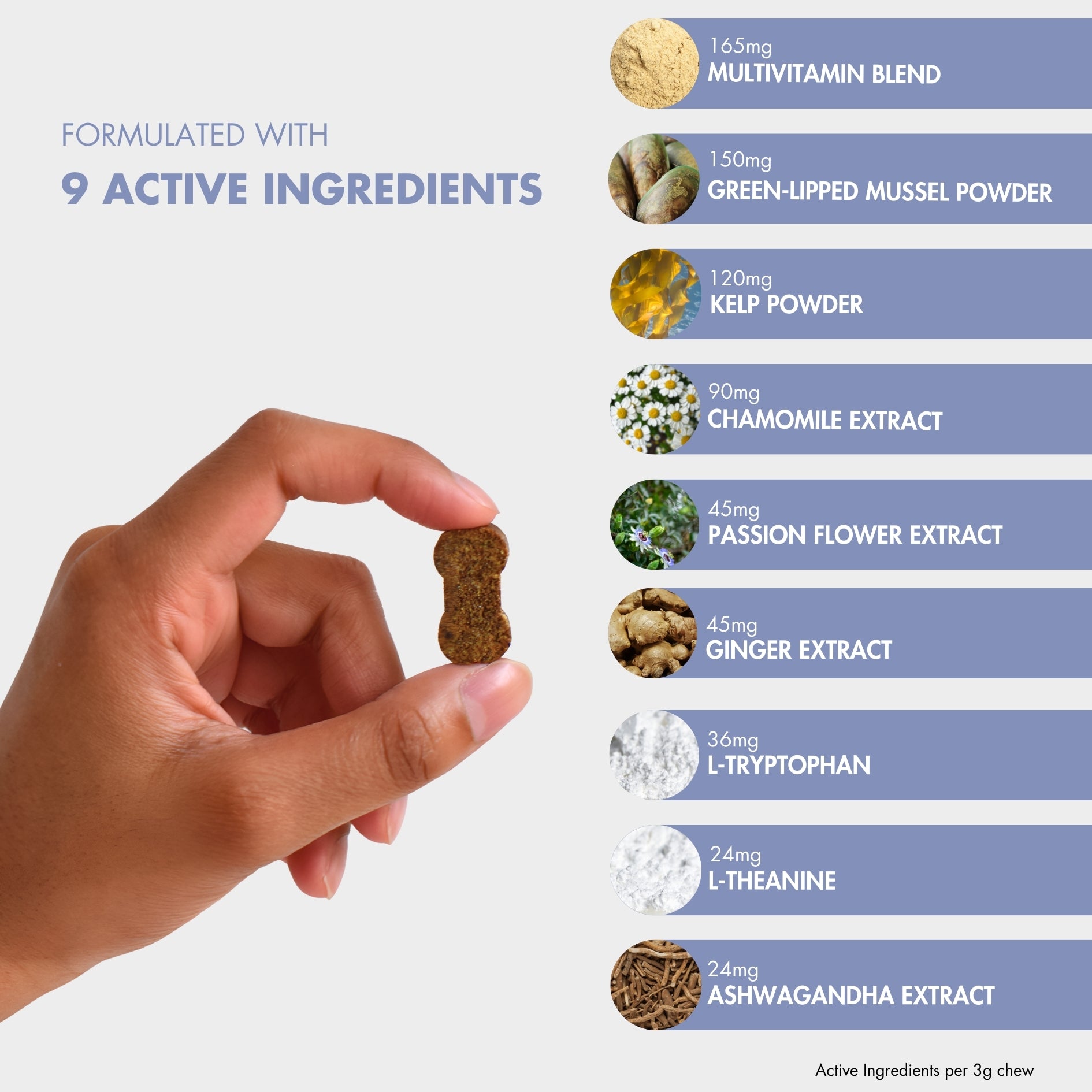
FlexiPaw's Calm & Relax Chews combine all the natural ingredients above : Ashwagandha, L-Theanine, L-Tryptophan, Chamomile, Passion Flower and Ginger Extract : into a single heart-shaped chew your dog will actually enjoy. Nine active ingredients in total, including our signature GlycOmega™-PLUS green-lipped mussel.
Formulated and manufactured in New Zealand. No harmful side effects. 30-day money-back guarantee.
Shop Calm & Relax Chews →What's in Each Chew?
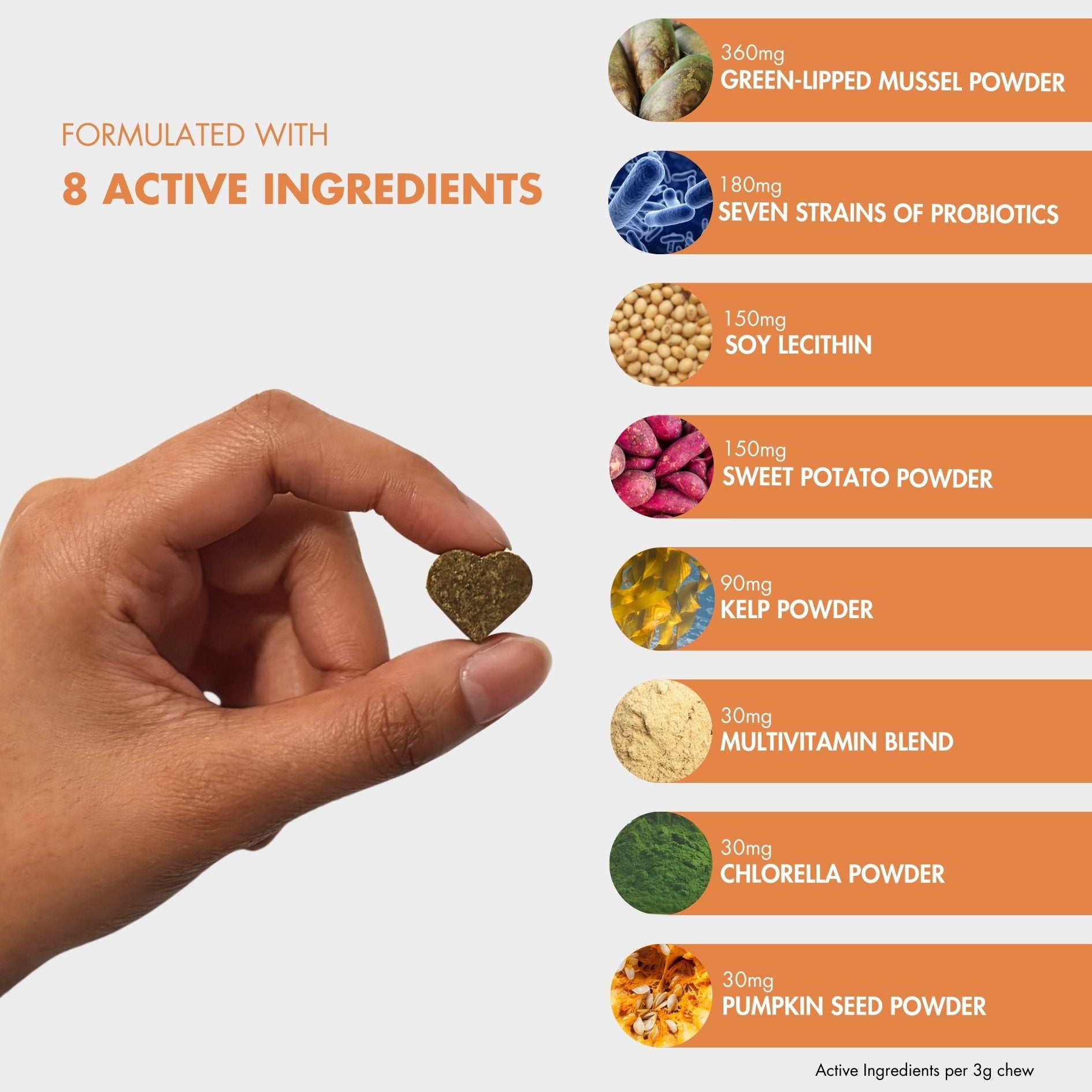
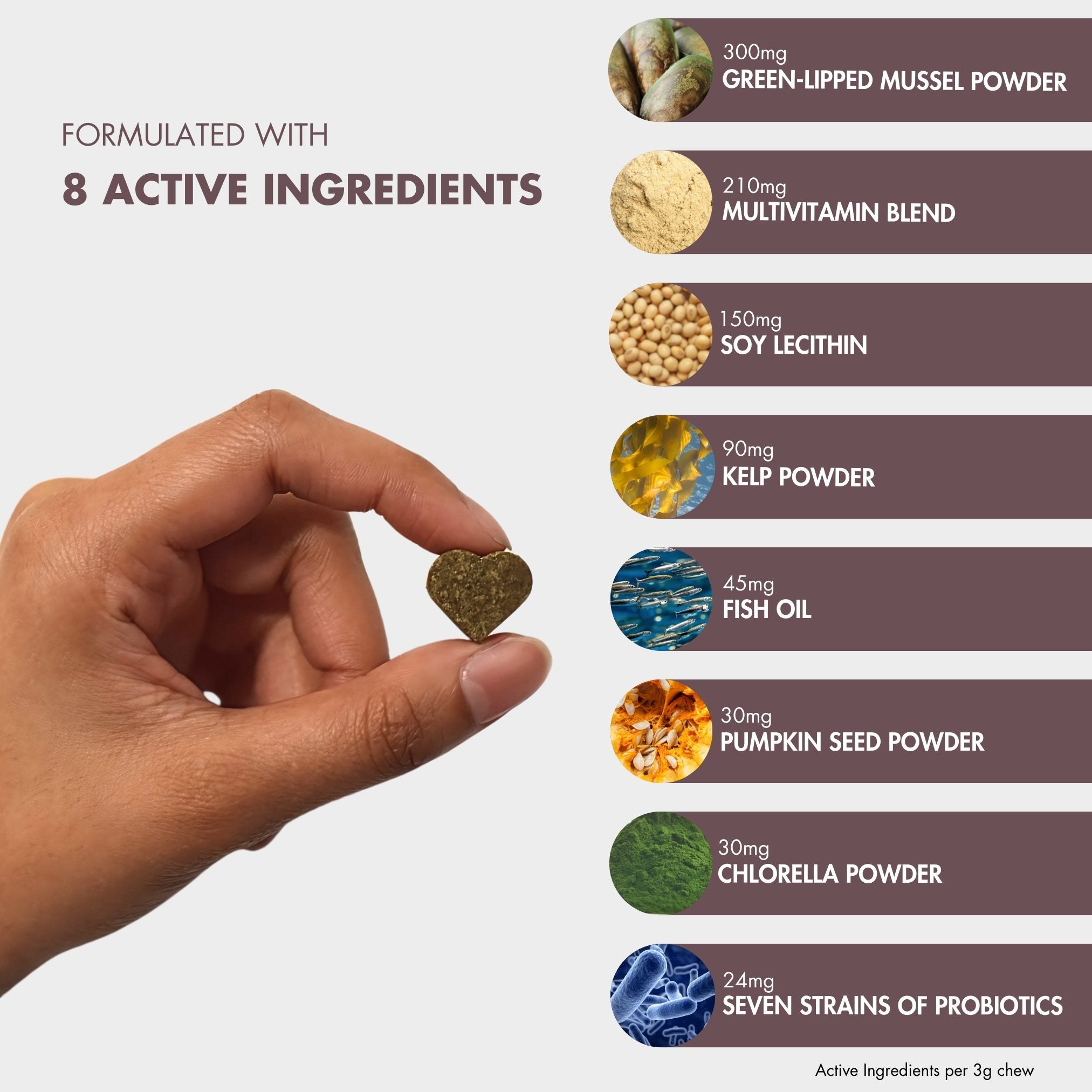
If you want to understand exactly what you're giving your dog, here's the full ingredient breakdown per 3g chew:
| Ingredient | Amount per chew | What it may help with |
|---|---|---|
| Multivitamin complex | 165mg | General health and wellbeing |
| GlycOmega™-PLUS Green-lipped mussel | 150mg | Joint support and overall wellness |
| Kelp powder | 120mg | Thyroid function and coat health |
| Chamomile extract | 90mg | Calm and relaxation |
| Passion flower extract | 45mg | Nervousness and stress support |
| Ginger extract | 45mg | Digestive comfort |
| L-Tryptophan | 36mg | Mood and serotonin support |
| L-Theanine | 24mg | Calm without drowsiness |
| Ashwagandha extract | 24mg | Balance and stress adaptation |
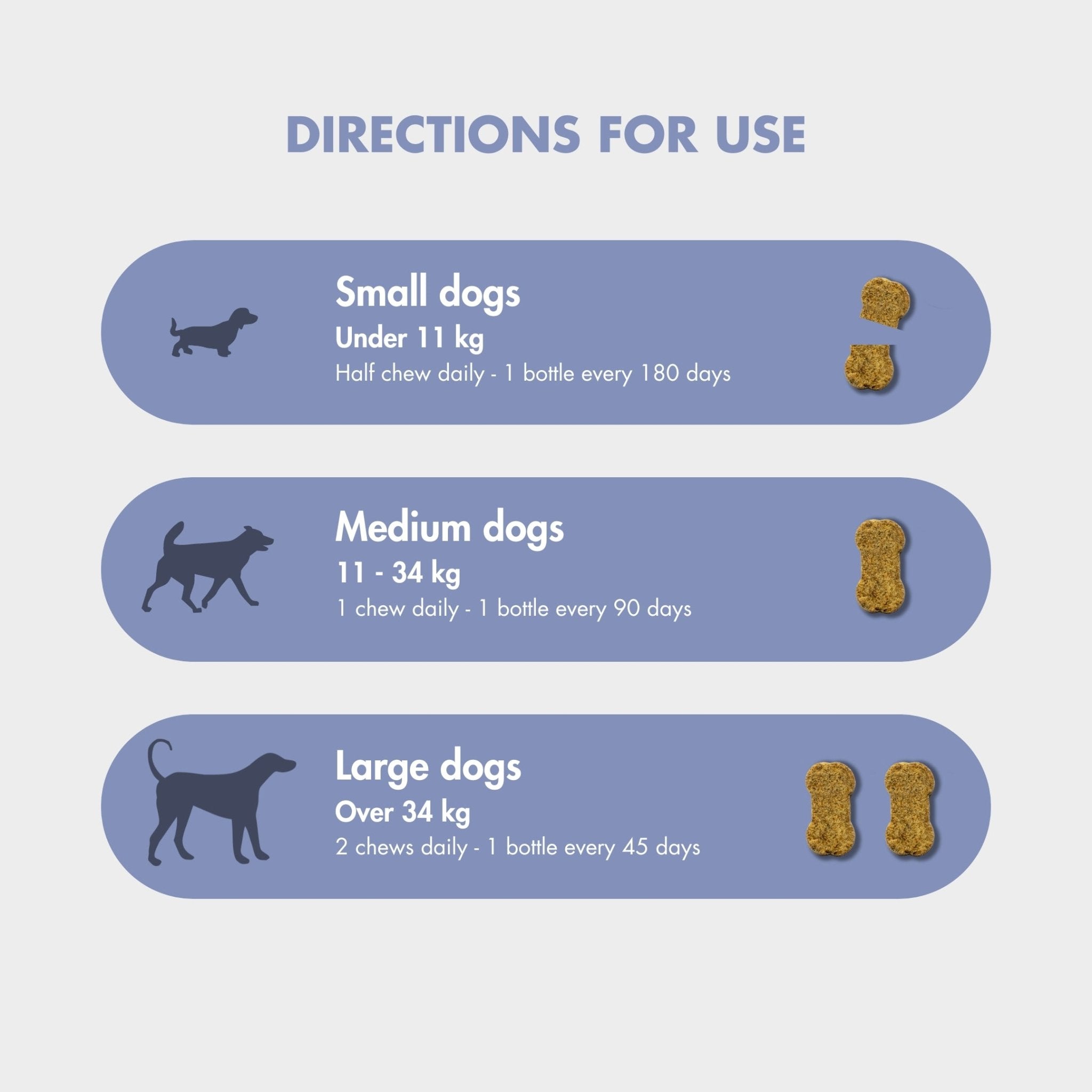
Dosage Guide
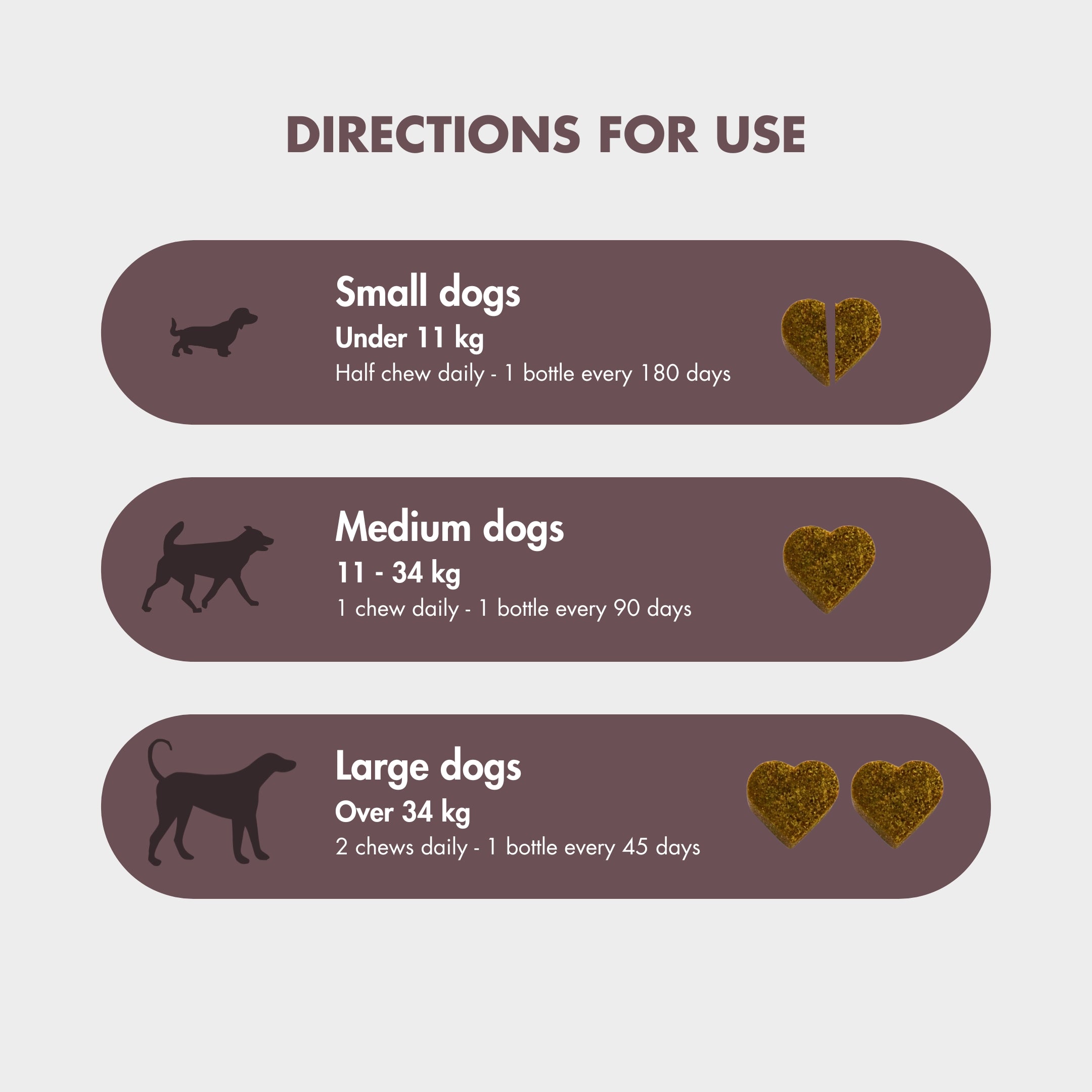
| Dog Size | Daily Dose | Container Duration |
|---|---|---|
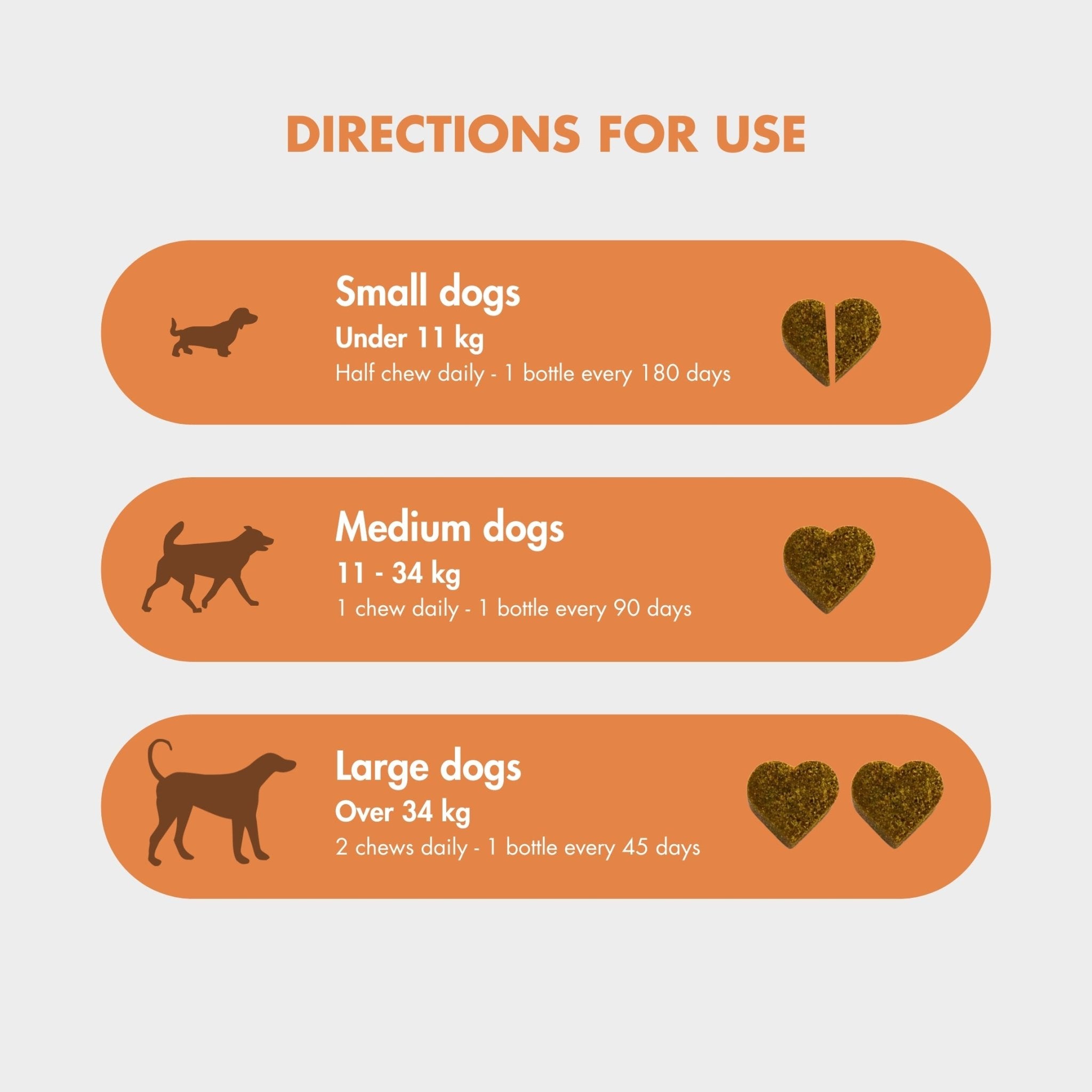
| Small (under 11kg) | Half a chew daily | Up to 180 days |
| Medium (11 to 34kg) | 1 chew daily | Up to 90 days |
| Large (over 34kg) | 2 chews daily | Up to 45 days |
Building a Calming Daily Routine
Supplements and strategies work best when they're part of a consistent daily rhythm. Here's a simple structure that many NZ dog owners have found helpful:
Sample Calming Daily Routine
| Morning | Consistent walk at the same time. Give Calm & Relax Chew with or after breakfast. |
| Midday | Puzzle feeder or sniff game if leaving dog alone. Calming music on in the background. |
| Afternoon | Play session or second walk. Mental stimulation : training, sniff walk, or new toy. |
| Evening | Quiet wind-down time. Consistent bedtime. Safe space available and accessible. |
Consistency is the most important factor. Even if you can only implement one or two of these steps, doing them at the same time every day will gradually signal to your dog that the world is predictable and safe.
When to Talk to Your Vet
Natural strategies and calming treats work well for mild to moderate anxiety. But some situations call for professional support:
- Anxiety that is severe, escalating, or has appeared suddenly
- Aggression linked to fear that poses a safety risk
- Self-harming behaviours such as excessive licking or scratching to injury
- Anxiety that doesn't improve after several weeks of consistent management
- Any behavioural change that might indicate underlying pain or illness
Your vet can help rule out medical causes, refer you to a qualified behaviourist if needed, and discuss whether prescription options might be appropriate alongside natural approaches. There's no shame in asking for help : getting your dog the right support is exactly what a good pet parent does.
Frequently Asked Questions
Click any question below to see the answer.
The Bottom Line
Anxiety in dogs is common, but it's also very manageable with the right approach. Start with the basics : consistent routines, a safe space, plenty of exercise, and staying calm yourself. For dogs who need extra support, natural calming supplements with well-researched ingredients can make a meaningful difference as part of a broader strategy.
The key is consistency. Calming a stressed dog is not a one-day fix : it's a series of small, steady improvements that add up over time. Most dogs respond well, and the change in quality of life : for both the dog and the owner : is well worth the effort.
From the FlexiPaw Range
Ready to Support a Calmer, Happier Dog?
FlexiPaw's Calm & Relax Chews are formulated with nine natural ingredients : Ashwagandha, L-Theanine, Chamomile, Passion Flower, Valerian Root, and more : designed to support your dog's nervous system and promote day-to-day calm. Heart-shaped, delicious, and manufactured right here in New Zealand.
Rated 4.8 stars. 30-day money-back guarantee. Free NZ shipping on subscriptions. Save 15% on your first subscription order.
Shop Calm & Relax Chews → Explore the Full Range →Know another dog owner who's struggling with an anxious pup? Share this guide with them. 🐾
Disclaimer: The content on this website is for educational purposes only and should not replace professional veterinary advice. We recommend you talk to your veterinarian if you have any concerns. Products on this website are not intended to diagnose, cure, treat or prevent any disease. The statements made on this website have not been evaluated by the Food and Drug Administration.







![FlexiPaw Calm & Relax Chews for Dogs - Soft chews made with Ashwagandha, L-Theanine, Chamomile & Passion Flower to help relieve dog anxiety and promote relaxation. [270g container]](http://flexipaw.com/cdn/shop/files/website_slider_CALMING_b2a57442-9be6-4f29-82ec-67f758fb05dc.jpg?v=1726977474&width=4050)

Leave a comment