

How to Choose the Best Probiotic for Your Dog’s Digestive Health: A Guide to Canine Wellness

🐾 Quick Answer
The best probiotic for your dog contains multiple clinically recognised strains, complementary prebiotic ingredients, no unnecessary fillers, and a delivery form your dog will actually eat. If you're in New Zealand, you also want something formulated and manufactured in New Zealand with transparent ingredients. This guide tells you exactly what to look for - and what to avoid.
In this guide:
- What are probiotics and why do dogs need them?
- Signs your dog's gut health needs support
- What to look for in a dog probiotic
- The 7 probiotic strains - and what each one does
- Ingredients that boost probiotic results
- How to introduce a probiotic correctly
- Building a gut health routine
- Frequently asked questions
Your dog's gut is home to billions of bacteria that form part of the digestive system. Keeping that bacterial community balanced is something many dog owners actively support through diet, routine, and daily supplements.
Probiotics are one of the most widely used natural tools for restoring that balance. But walk into any pet shop in New Zealand and you'll find a shelf full of options with very different ingredients, strain counts, and quality levels. Knowing what to look for is the difference between a supplement that genuinely helps and one that doesn't do much at all.
This is the guide we wish every Kiwi pet parent had before they made their first purchase.
What Are Probiotics and Why Do Dogs Need Them?
Probiotics are live, beneficial bacteria that - when given in adequate amounts - may help maintain or restore the natural balance of microorganisms in your dog's gut. Think of the gut as a complex ecosystem: it needs a diverse and thriving community of good bacteria to function properly.
When that balance is disrupted - by antibiotics, illness, stress, dietary changes, or even just day-to-day variation - the gut can become less efficient. Digestive changes often follow. Many dog owners choose to support their dog's gut with a daily probiotic supplement as part of a broader health routine.
A well-formulated probiotic supplement is designed to:
- Introduce beneficial bacteria into the digestive system
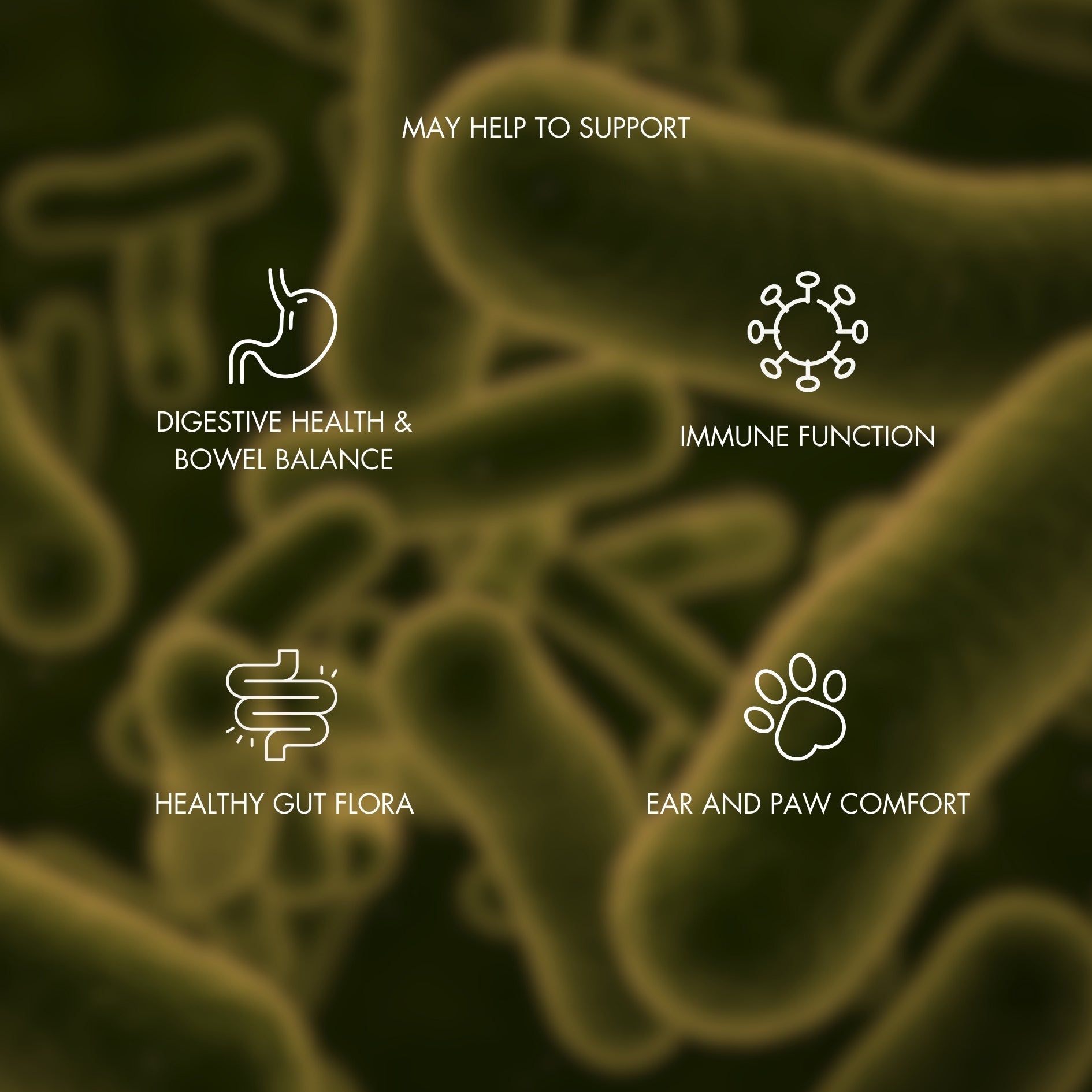
- Support a healthy balance of gut flora
- Complement your dog's diet during periods of change or stress
- Be given consistently as part of a daily supplement routine
🧫 Did you know?
Dogs have a gut microbiome made up of billions of bacteria - a complex community that varies from dog to dog. Probiotic supplements are designed to introduce beneficial strains into this environment as part of a daily wellness routine.
Signs Your Dog's Gut Health Needs Support
Gut imbalance doesn't always present as obvious digestive problems. Many of the signals are subtle, and easy to put down to other causes. Here's what to look for.
Does your dog show any of these signs?
|
|
Ticking two or more of these regularly? A daily probiotic supplement is worth exploring - particularly one formulated specifically for dogs.
Situations That Particularly Call for Probiotic Support
- After antibiotics: Antibiotics affect both harmful and beneficial bacteria. Many pet owners choose to introduce a probiotic supplement during and after a course of antibiotics to support their dog's gut during this period.
- Diet changes: Switching food brands or introducing new treats can sometimes cause digestive changes. A probiotic may help support the gut during the transition.
- Stress and anxiety: Stressful events - kennelling, travel, or changes at home - can affect how a dog's digestive system functions. A daily probiotic may support gut balance during these times.
- Rescue dogs and new environments: Dogs settling into a new home often experience digestive changes as they adjust. A daily probiotic from day one can be a useful part of their new routine.
- Ageing dogs: Many owners of older dogs choose to include a daily probiotic as part of a broader wellness routine to support ongoing gut health.
What to Look for in a Dog Probiotic
This is where most buying decisions go wrong. Here are the four criteria that actually matter.
1. Multiple Probiotic Strains
Different bacterial strains perform different functions in the gut. A single-strain product is limited. Look for a supplement with at least five to seven well-researched strains - including both Lactobacillus and Bacillus species - to get meaningful coverage across different parts of the digestive system.
2. Complementary Ingredients
The best probiotic supplements don't stop at bacteria. Prebiotics (like sweet potato and pumpkin seed) feed the probiotic strains and help them thrive. Superfoods like chlorella and green-lipped mussel add further nutritional support. A supplement that combines all of these is significantly more effective than one that delivers probiotics in isolation.
3. Quality Manufacturing and Transparency
Know where your supplement is made and what's in it. Here in New Zealand, we have high standards for supplement manufacturing - and choosing a product formulated and manufactured in New Zealand means you know what you're getting. Avoid products with excessive fillers, artificial flavours, or vague ingredient descriptions.
The 7 Probiotic Strains - and What Each One Does
Not all probiotic strains are equal. Each performs a specific role in the gut. Here's a breakdown of the seven strains in FlexiPaw's Probiotic Gut Health Chews and what they may each contribute:
| Strain | Type |
|---|---|
| Bacillus coagulans | Spore-forming Bacillus strain. Highly stable and widely used in pet supplement formulations. |
| Bacillus licheniformis | Resilient Bacillus strain that remains active through the digestive process. |
| Bacillus subtilis | Well-established Bacillus strain commonly included in multi-strain probiotic blends. |
| Lactobacillus acidophilus | One of the most widely recognised and studied Lactobacillus strains used in probiotic supplements. |
| Lactobacillus plantarum | Highly adaptable Lactobacillus strain found in a wide range of probiotic products for dogs. |
| Lactobacillus animalis | Lactobacillus strain naturally associated with the canine and feline digestive tract. |
| Streptococcus thermophilus | Widely used probiotic strain included in many multi-strain formulations for pets. |
Seven named strains across both Bacillus and Lactobacillus families means broader coverage than a single-strain product — which is why strain variety matters when choosing a probiotic for your dog.
From the FlexiPaw Range
All 7 Strains. One Daily Chew. Formulated and Manufactured in New Zealand.
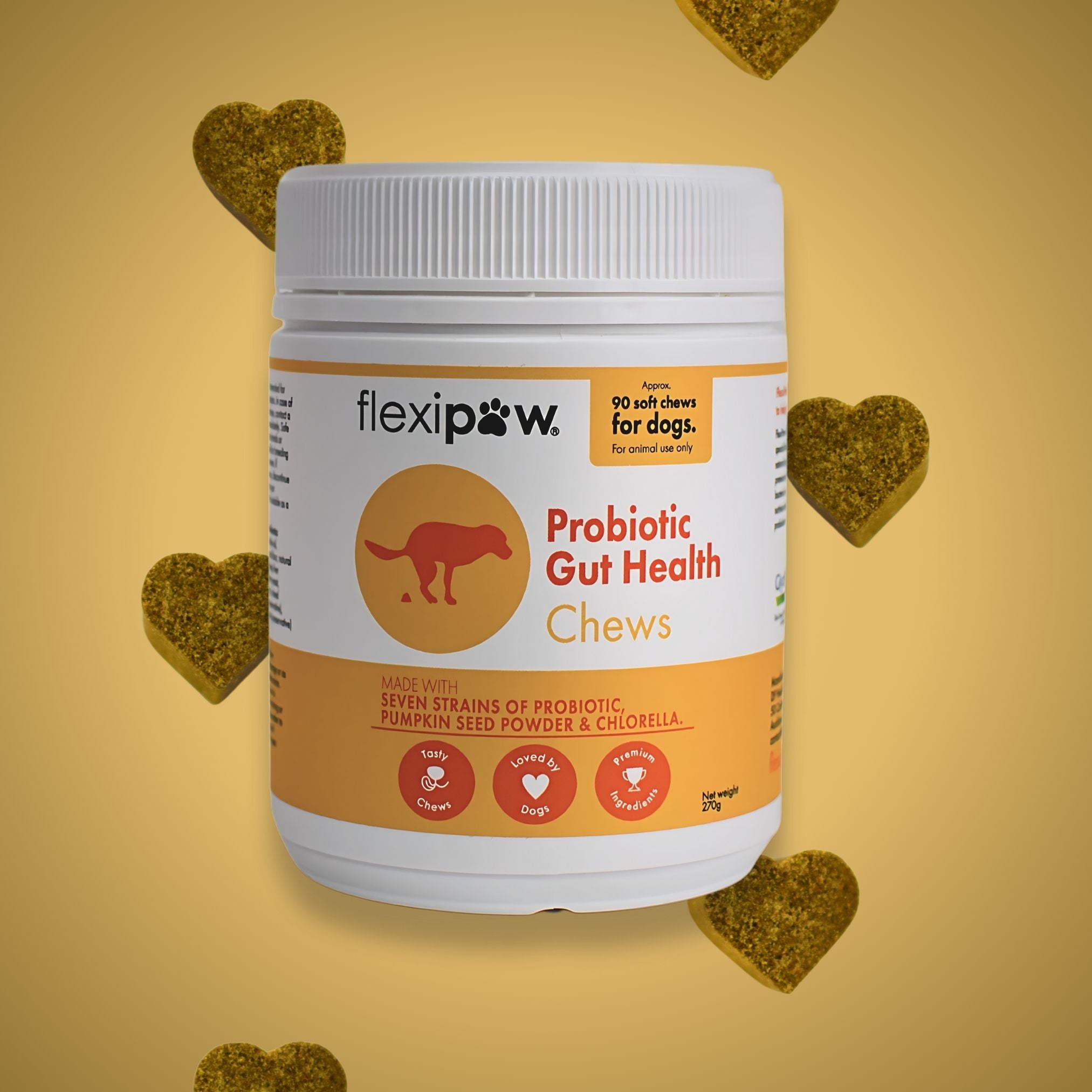
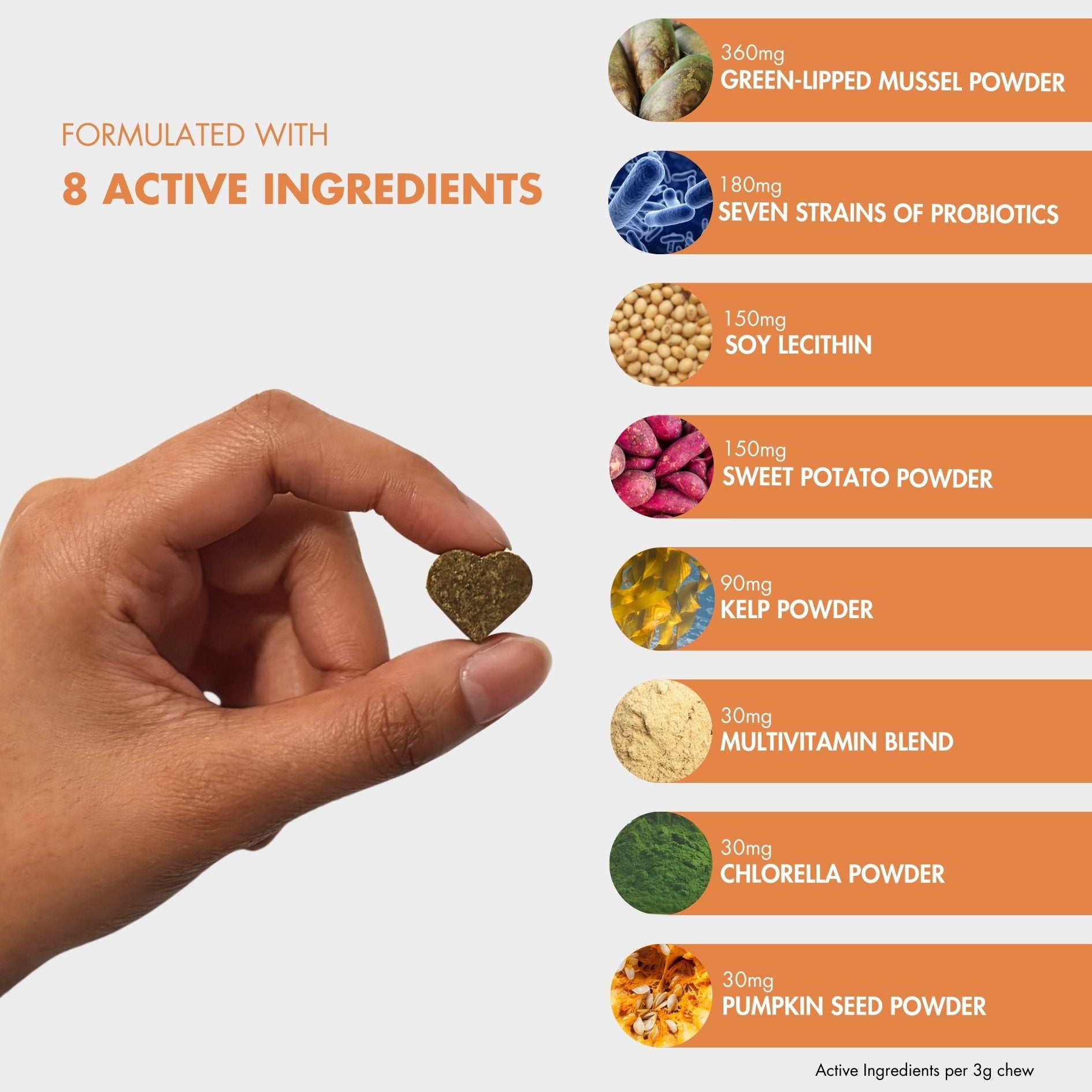
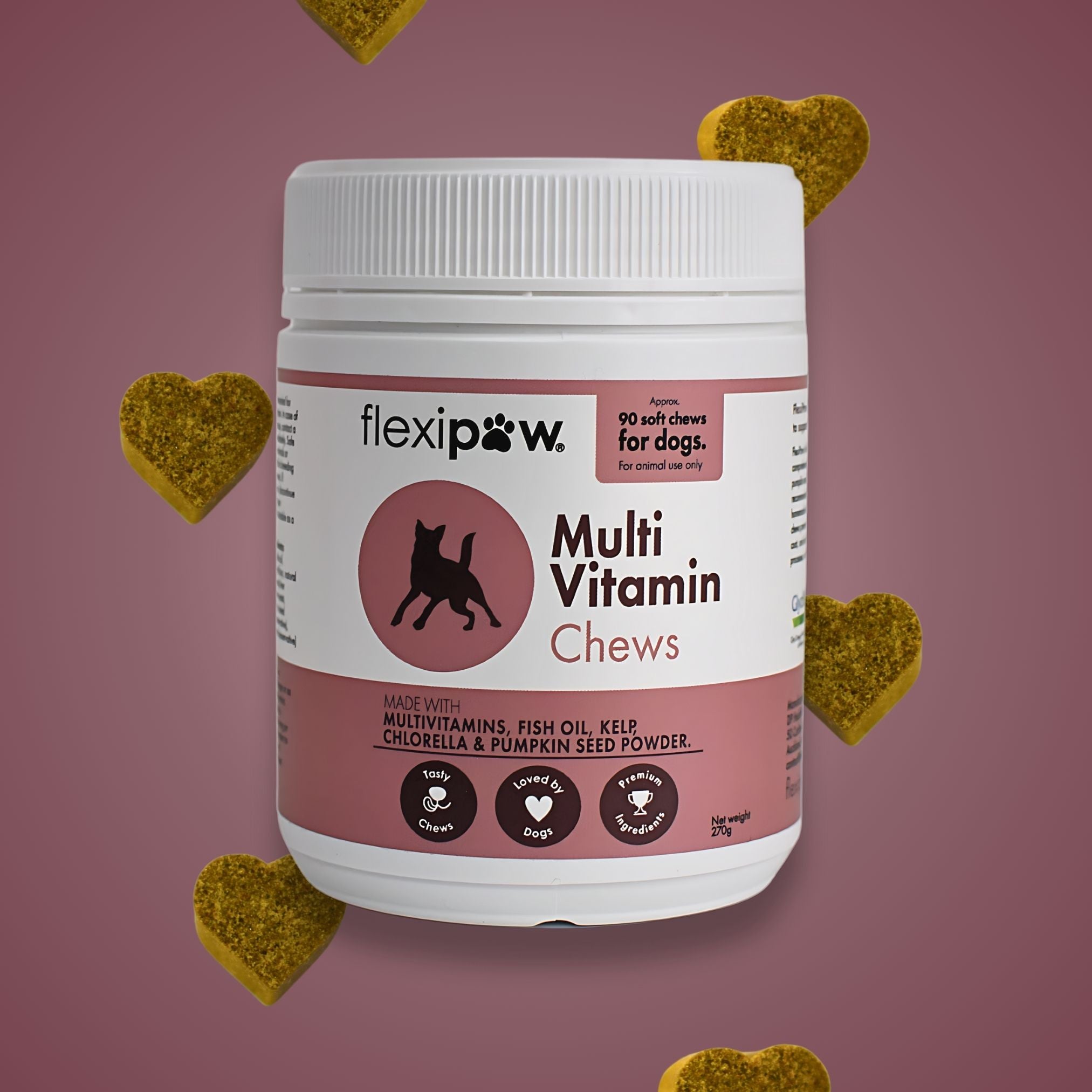
FlexiPaw's Probiotic Gut Health Chews contain all seven strains above, plus GlycOmega™-PLUS green-lipped mussel, chlorella, pumpkin seed powder, and sweet potato - eight active ingredients in a heart-shaped chew your dog will come running for.
Made right here in New Zealand. 30-day money-back guarantee. Save 15% on your first subscription order.
Shop Probiotic Chews →What Kiwi dog owners are saying:
"Kaia was always licking her paws vigorously. We decided to try her on these chews and like magic she only licks her paws to clean them." : Lj F.
"I have two cavoodles with delicate tummies, so it was like a roller-coaster from day to day. The probiotic taken daily at mealtime has helped to settle these tummy issues and rarely have an upset stomach now." : Tracy B.
"Product has definitely helped with consistency of normal bowel motions for our pooch. On second order. Love it!" : Natalie T.
Ingredients That Boost Probiotic Results
The probiotics do the heavy lifting - but a well-formulated supplement surrounds them with ingredients that help them survive, thrive, and deliver more.
GlycOmega™-PLUS Green-Lipped Mussel (360mg)
New Zealand's green-lipped mussel is the cornerstone of every FlexiPaw product. GlycOmega™-PLUS is sustainably farmed in New Zealand and included in these chews as a complementary natural ingredient alongside the probiotic blend.
Sweet Potato Powder (150mg)
A natural source of dietary fibre included as a prebiotic ingredient. Prebiotic fibres are designed to provide a food source for the probiotic strains in the supplement.
Pumpkin Seed Powder (30mg)
A commonly used natural ingredient in dog supplements, included here as an additional source of dietary fibre to complement the probiotic strains.
Chlorella Powder (30mg)
A nutrient-dense microalga included as a natural complementary ingredient, adding further nutritional variety to the supplement formula.
Kelp Powder (90mg)
A natural source of trace minerals and iodine, included as part of the broader ingredient blend.
Multivitamin Blend (30mg)
A blend of vitamins including A, B1, B2, B6, B12, C, D, E, Biotin, and Folic Acid — included to support the overall nutritional profile of the chew.
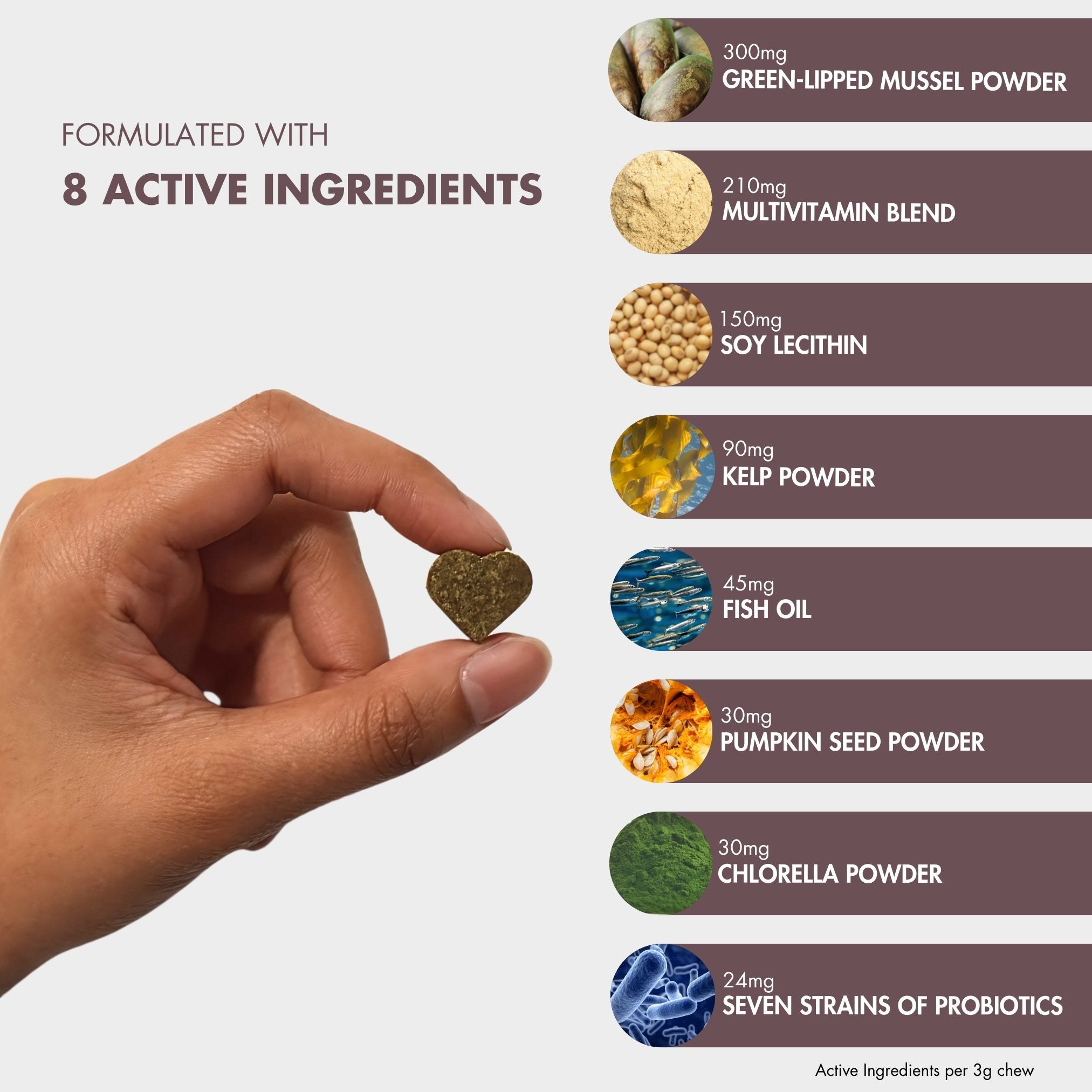
Complete ingredient breakdown per 3g chew:
| Ingredient | Amount | Notes |
|---|---|---|
| GlycOmega™-PLUS Green-lipped mussel | 360mg | NZ green-lipped mussel — natural complementary ingredient |
| 7-strain probiotic blend | 180mg | Beneficial bacteria across Bacillus and Lactobacillus families |
| Soy lecithin | 150mg | Natural emulsifier, part of the chew base |
| Sweet potato powder | 150mg | Natural prebiotic fibre source |
| Kelp powder | 90mg | Natural source of trace minerals |
| Multivitamin blend | 30mg | Vitamins included in the nutritional profile |
| Chlorella powder | 30mg | Nutrient-dense microalga, natural complementary ingredient |
| Pumpkin seed powder | 30mg | Natural fibre source, prebiotic complement |
How to Introduce a Probiotic Correctly
Even with a high-quality probiotic, the way you introduce it matters. Start too fast and some dogs experience temporary digestive changes as their gut adjusts.
Dosage Guide
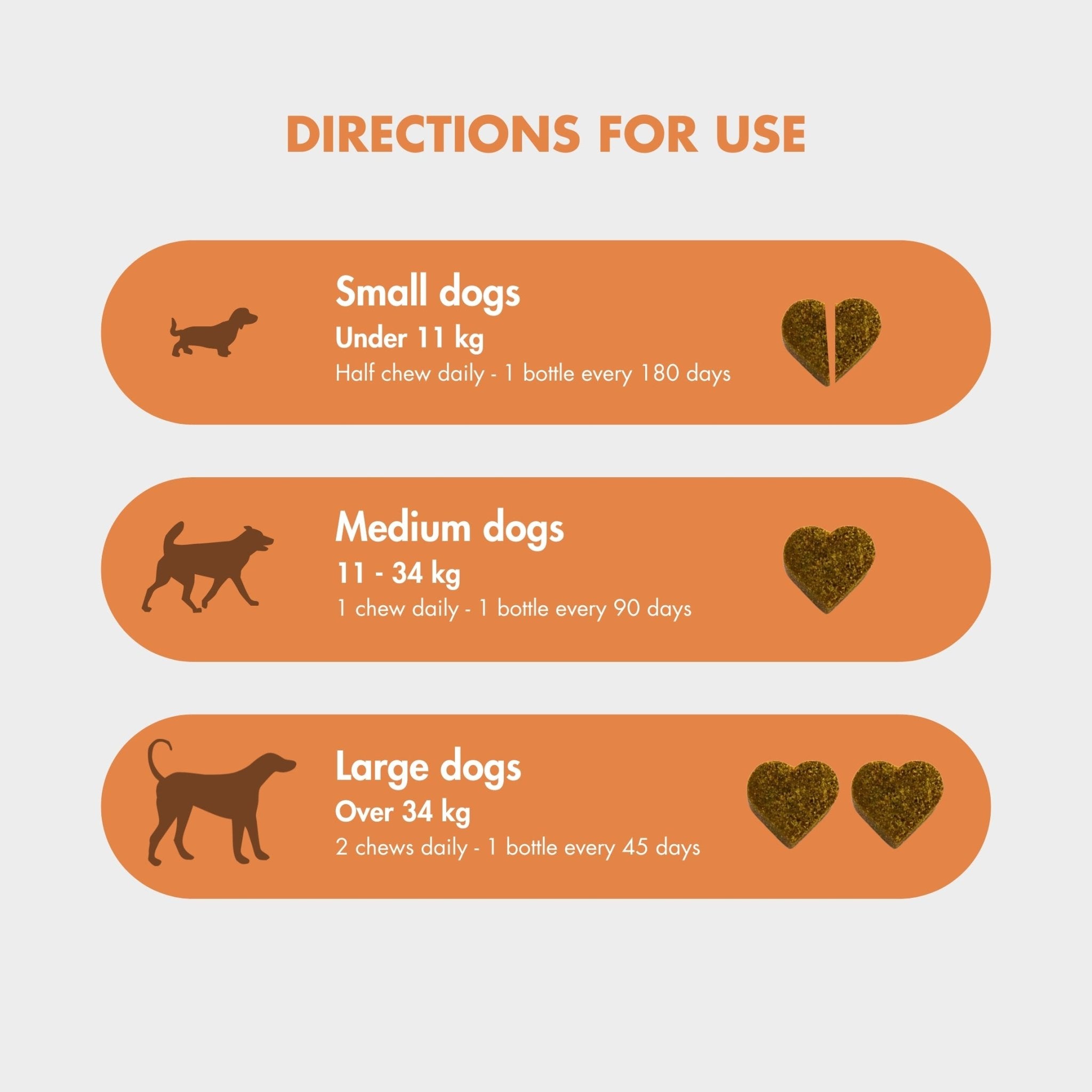
| Dog Size | Daily Dose | Container Duration |
|---|---|---|
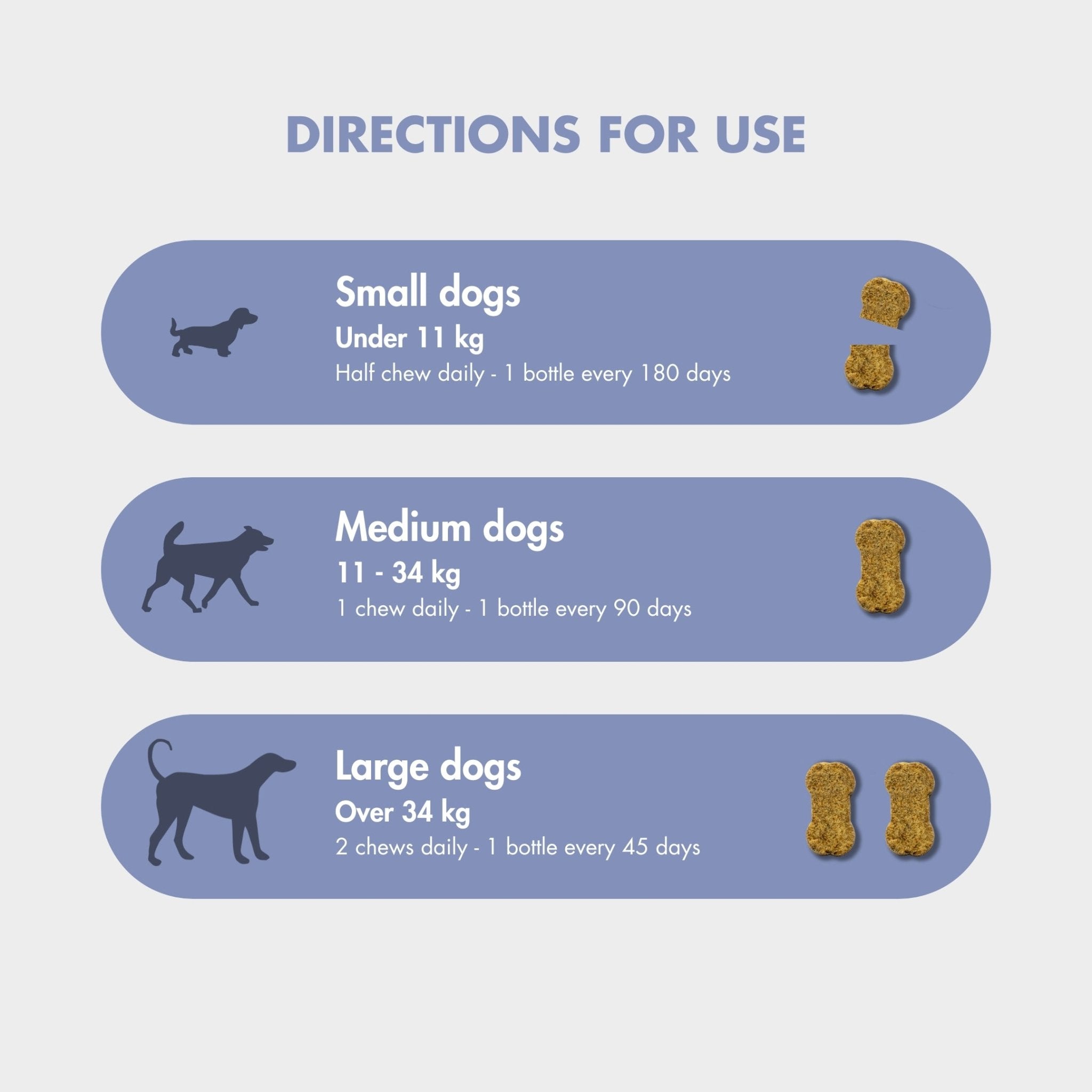
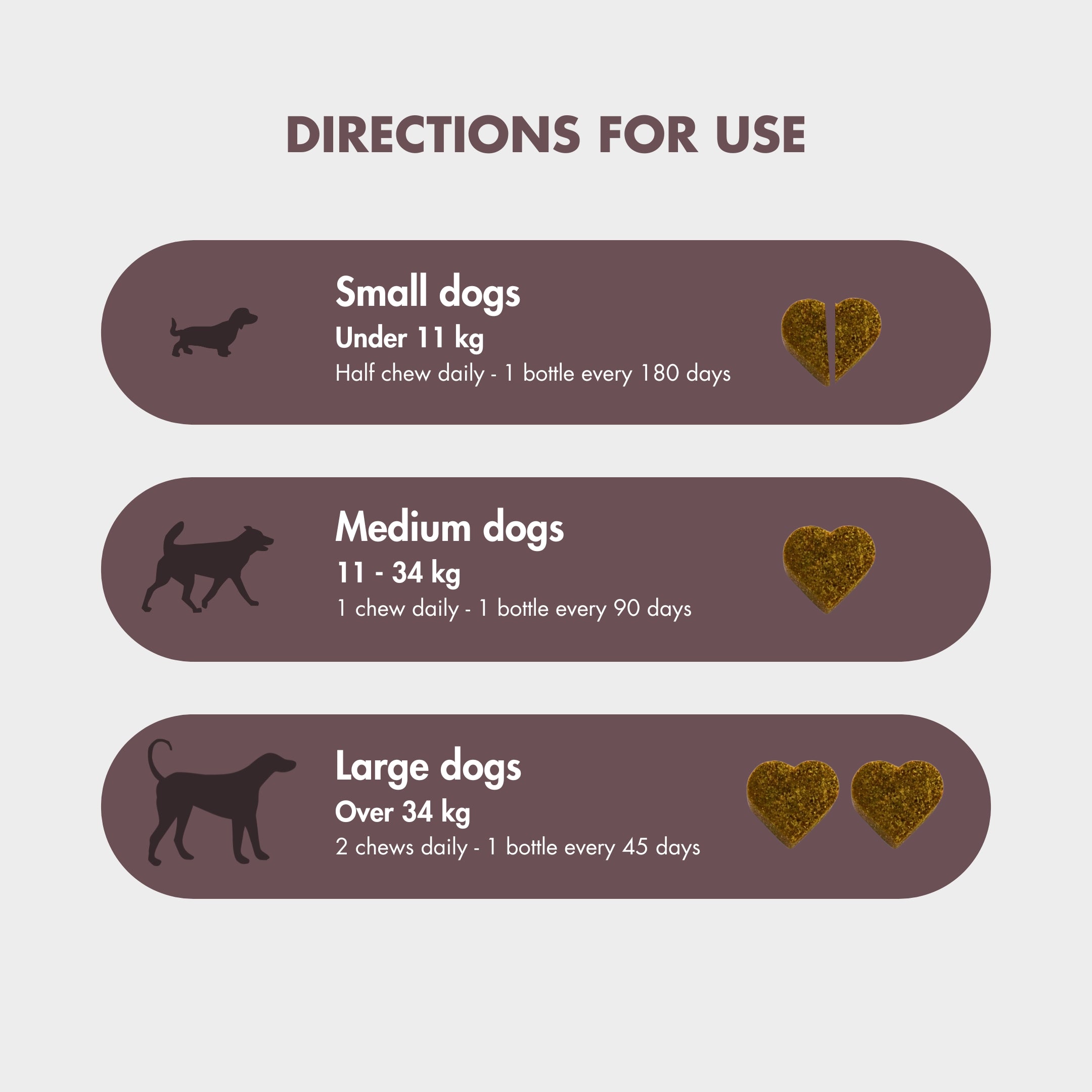
| Small (under 11kg) | Half a chew daily | Up to 180 days |
| Medium (11 to 34kg) | 1 chew daily | Up to 90 days |
| Large (over 34kg) | 2 chews daily | Up to 45 days |
🐾 Introduction Tip
Give the chew during or just after a meal - not on an empty stomach. This reduces the chance of any initial digestive adjustment and helps the probiotic strains survive passage through stomach acid more effectively. Most dogs treat them like a reward and need no encouragement at all.
Give it time. Most owners give it two to four weeks of consistent daily use before assessing how their dog is going. The key is consistency - a daily habit works better than an occasional one.
Building a Gut Health Routine
A probiotic works best as part of a broader approach to digestive health. Here's what the most consistent results look like in practice:
Daily gut health routine
| Consistent feeding | Feed at the same times each day. Irregular feeding disrupts the gut rhythm and makes it harder for probiotic bacteria to maintain balance. |
| Daily probiotic | Give FlexiPaw Probiotic Gut Health Chews with or just after breakfast. Same time every day builds the habit for you and the beneficial bacteria in the gut. |
| Gradual food changes | When changing food, transition over 7 to 10 days - mixing increasing proportions of the new food with the old. A probiotic during this period helps the gut adapt with less disruption. |
| Fresh water | Hydration is essential for healthy digestion. Change the water bowl daily and encourage drinking, especially in warmer months. |
| Monitor and adjust | Keep an eye on stool consistency, energy levels, and paw and ear behaviour. These are your gut health barometers - and often the first to show improvement. |
Frequently Asked Questions
Click any question below to see the answer.
The Bottom Line
A well-formulated dog probiotic - with multiple named strains, prebiotic fibre, and complementary natural ingredients - makes a considered addition to your dog's daily routine. Choosing one with transparent ingredients, named strains, and quality manufacturing is the best starting point.
When choosing, look for strain variety, transparency about ingredients, and a form your dog will actually eat. Here in New Zealand, where we have access to some of the finest natural ingredients in the world - including green-lipped mussel from our own coastlines - there's no reason to settle for anything less than excellent.
Our Recommendation
FlexiPaw Probiotic Gut Health Chews
7 probiotic strains. GlycOmega™-PLUS. Prebiotic fibre. Formulated and manufactured in New Zealand. Heart-shaped chews dogs actually beg for. 8 active ingredients in every 3g chew - nothing hidden, nothing vague.
Rated 4.8 stars by Kiwi and Australian dog owners. 30-day money-back guarantee. Save 15% on your first subscription order.
Subscribe and receive free shipping. Pause, skip or cancel anytime - no lock-in.
Shop Probiotic Chews → Explore the Full Range →Found this guide useful? Share it with another dog owner who's been wondering about probiotics. 🐾
Disclaimer: The content on this website is for educational purposes only and should not replace professional veterinary advice. We recommend you talk to your veterinarian if you have any concerns. Products on this website are not intended to diagnose, cure, treat or prevent any disease. The statements made on this website have not been evaluated by the Food and Drug Administration.







![FlexiPaw Calm & Relax Chews for Dogs - Soft chews made with Ashwagandha, L-Theanine, Chamomile & Passion Flower to help relieve dog anxiety and promote relaxation. [270g container]](http://flexipaw.com/cdn/shop/files/website_slider_CALMING_b2a57442-9be6-4f29-82ec-67f758fb05dc.jpg?v=1726977474&width=4050)

Leave a comment